Learning Resources
How do I learn Animation?
There are many roads to animation and there is no Correct
one that fits for everybody.
It's my opinion that when starting out, you shouldn't invest heavily financially. You can in fact learn a lot of animation principles while even still using just a mouse.
Where to start?
My recommendation is to start with choosing a free or inexpensive software, and watch some guides.
(I have them listed in software resources as well with links to those who provide tutorials for them)
Blender, Krita, and Tahoma2D are my usual recommendations for pc, but you can use whichever software you have the most interest in.
Start with learning the 12 principals of animation. Two great videos on this to reference are one by Alan Becker and another by Studio Binder.
For project practice based on what you will learn at a degree level Kribs has an excellent video on what most colleges/universities will start you with.
Theres honeslty so many great animators with fantastic tutorials on how to aproach learing various parts of animation.
Quick shoutouts to
Alex Grigg,
BaM Animation,
Kdsketch,
Crown Prince,
Modern day james,
Kuzillon,
Toniko Pantoja,
Brookes Eggeston, and so so many more.
As almost required reading I do recommend getting your hands on a copy of The Animator's Survivor Kit
by richard williams.
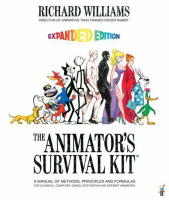
While I think it's great to own your own copy as you might find yourself reviewing it even years down the road in your career, if you don't have the money to invest, look for it at your local library.
Ink's Note - Libraries often even provide services you don't know about. Check them out and support them. Not only do they often have artbooks for references, they have some under utilized services. For instance the Toronto Library offers bookable recording space. If you don't have room or gear at home to record dialogue you can book it out for free! Libraries are amazing!
Life Drawing
I have seen the results that life drawing has on people's drawing skills first hand. I know a lot of people don't want to learn realism but learning to draw from reality helps you know when and how to break the rules with stylization. I honestly had a hard time learning it.
Many times when people tried to guide me, it just didn't click. This isn't a must but what worked for me was the book Movement and Form by Samantha Youssef The way it teaches and structures the approach to life drawing was more helpful than anything else I tried.

Not everyone has life drawing classes or events near them but there are online resources for this. Line of action has a excellent slection of life drawing subjects you can use for practice.
Ink's Note -
Many cities do offer life drawing drop-in events where a model is hired and you draw as a group. If you happen to be in the Toronto area I do recommend
The Peg Bar life drawing events as it is focused on life drawing for animation (The main difference is shorter time for poses as we need to learn to work fast with our gestures)
Should I go to school?
Many people have various views on this. In all honesty it is going to come down to your personal situation. The school path wasn't for me but I can see where it has value.
Consider the following;
- How do you learn best?
This is a big one. Do you thrive in a school environment? If structured learning suits you best, school can be a good option for you. - What are your plans post education?
If you're planning on only working within your country and have no interest in teaching in later year, the degree doesn”t matter. Employers will not ask for it unless you are trying to acquire a work VISA for working in another country.
(Yes, I know that there are options without a degree but that normally takes an industry work history of over 10 years to meet the minimum requirement. For new people that is not an option.) - How proactive are you?
In school you have access to a lot of benefits to your education. In most cases you have professors who have worked in the industry professionally, whose job it is to provide you critical feedback of where you are needing to improve and provide guidance on how to. They set a curriculum to follow that teaches you the majority of what you need to learn. They set deadlines and you get experience delivering to deadlines. Also you gain passive networking from your fellow classmates (see note in Career resources tab)
If you choose the self learning route you these things are all solely your responsibility. You need to be proactive in each one and hold yourself accountable. While you can save a lot of money, you have to put more work in to make up for the gaps the school route gives. - Socialization and Teamwork
This may not be the case for all schools but most College and Uni programs have you complete at least one big group project in one of your final years. While you always work alongside classmates, this project gives you an experience of working as a team to complete a project. This can be a valuable experience that helps you understand how we work in a studio. Each contributing our specializations to make the best thing we can where we couldn't alone. It will be combinations of good and bad experiences that test how you manage working with other people and different viewpoints. It's practice to how you navigate these issues in your professional work in the future. This is a much harder experience to cultivate while just solo learning. - Can you afford it?
Getting a degree does not guarantee you a job. Many who graduate don't end up working in this field (That is the reality in every industry. It's not limited to animation.) I never recommend going into massive debt for this industry. In very few places of the world will you ever hit triple digits in income. Some debt is fine but if it would seriously hinder your life don't owe so much that it feels crushing. Pick a school you can more reasonably afford. I know some schools are a different quality but investigate if they will teach you what you need to learn. Employers don't really care where you went to school. You can go to the best school in the world, get a degree, but if your portfolio isn't as good as the guy who didn't go to school, you're still the second choice.
Ink's Note - I do see other values in school outside of the program. When I look back at my time at Sheridan for Applied Commercial Photography, I see a lot of the soft skills I learned from interacting with people. I also made a lot of life long friendships that I feel was the most value I got out of school. While it wasn't how I learned best and cost me a lot of debt, I did have experiences that I would not have otherwise. School was the wrong path for me financially and educationally but it was a great choice socially and for my personal development as a human. If the school path is right for you, it will be entirely personal. Whichever path you choose, I wish you the best.